
Top Sponsors of this Article
 Your Name - Your Organization Your Name - Your Organization Your Name - Your Organization Your Name - Your Organization
Table of Contents
You cannot defeat hunger using willpower, but with know power, you can outsmart hunger.
Simplify, Experience, Believe, and Act.
As discussed in the lesson, It's About Know Power, Not Willpower, when faced with a shortage of nutrition, the body's chemistry will change until it forces you to eat, no matter how strong your willpower is. Over some time period, this chemistry makes eating an involuntary human reflex. The mechanism by which the body accomplishes this is called hunger. Eventually, given enough time and if food is available, everyone but the most extreme outlier will eat.

You can no more voluntarily stop eating than you can voluntarily stop breathing, your heart from beating, food moving through your digestive tract, blinking, and so on. Hunger will overpower you if you challenge it directly. Hunger also becomes more powerful and pervasive in the presence of flavor-enhanced factory food and bioreactor dysfunction and dysbiosis.
The more you overeat factory food, the more sedentary you are, and the further along your bioreactor dysfunction and dysbiosis are, the hungrier you will be for a given nutritional deficit.
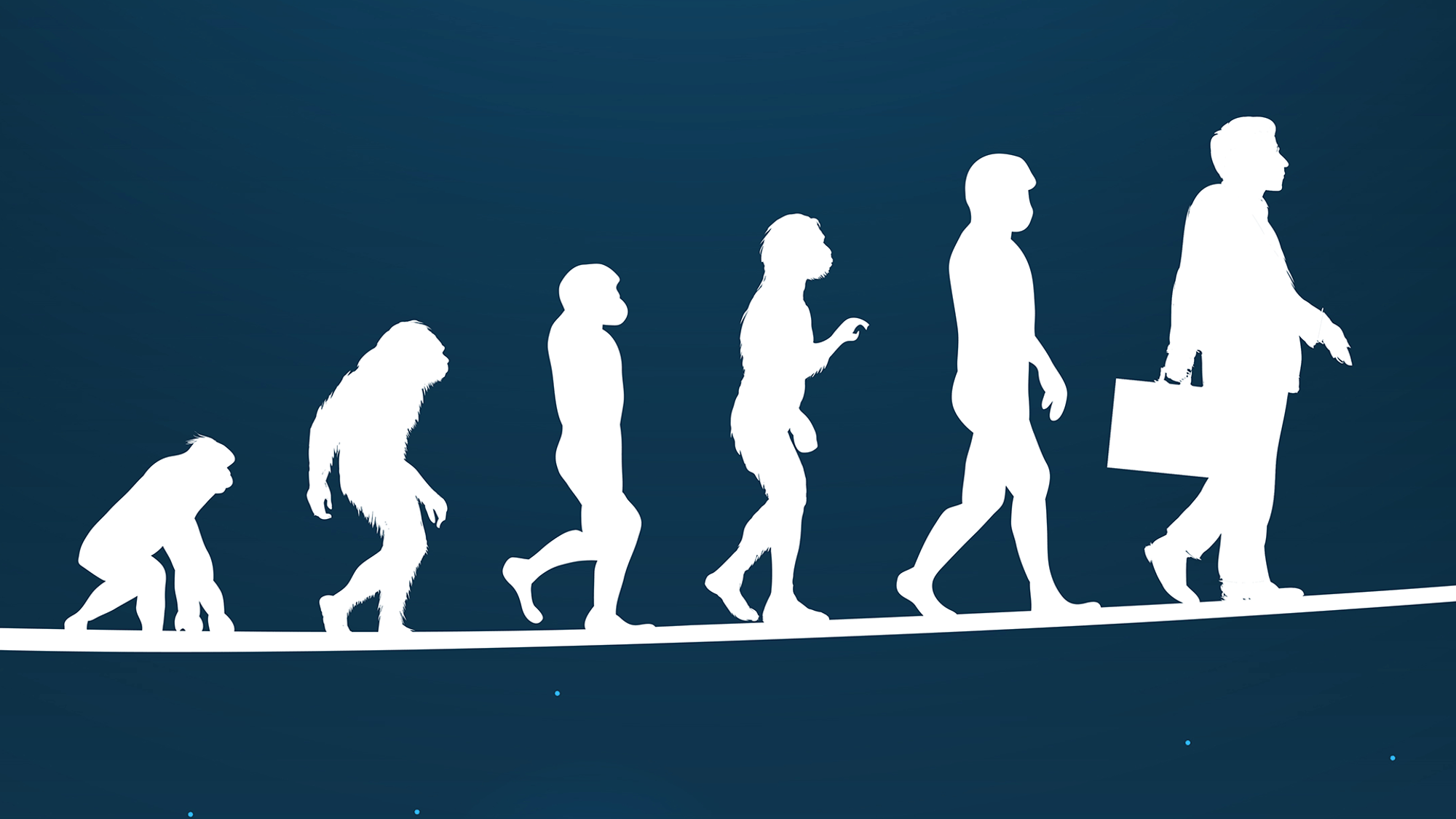
Hunger is a critical survival system refined over hundreds of thousands of years to force humans to seek nutrition. Throughout the time human biology evolved, food was scarce, the environment was hazardous, and humans were prey to many other creatures. This made food gathering tough work and very dangerous. It took a lot of motivation to leave your safe place, attack animals that could attack you back, and claw food out of the earth. That motivation came from a powerful feeling of hunger that enabled the human species to survive and ultimately thrive. The genes of humans without robust hunger didn't survive to modern times.
A powerful hunger is ideally suited to support survival during nutrition scarcity. Yet, hunger is proving to be a threat to humanity in a time of abundant nutrition. Nutrition was scarce for hundreds of thousands of years during evolution, but nutrition has been abundant only for a few thousand years. This period of nutrition abundance is far too short for evolution to adapt the human body. We're on our own to adapt to hunger in a time of nutrition abundance.
So, how do you control something so fundamental to the survival of your species? By using know power to better understand hunger. We begin by recognizing that hunger is an umbrella term for many different systems in the body, each triggered by a different threshold and each using a different mechanism to motivate you to act to take in nutrition. Reducing hunger is called satiety. Satiate means to satisfy. If something satisfies your hunger, it is said to satiate you.
Many sources describe the biology, biochemistry, and psychology of hunger. We will focus on the most potent biological and mental aspects of satiating hunger. Restoring hunger to manageable levels is accomplished through avoiding hunger stimulants and a biological process of reversing bioreactor dysfunction and dysbiosis.
Weight loss and control do not happen without experiencing hunger, at least not without drugs and surgery. So, the goal is not to eliminate all hunger but to restore it to natural levels where eating once again becomes voluntary.
We begin by establishing what we mean by a natural level of hunger. The hunger management approaches discussed in this lesson are for hunger that exceeds the natural hunger described here.
Natural hunger does not mean hunger-free. Moderate short-term hunger is important operational feedback on the body’s needs. Natural hunger occurs normally 3 to 4 hours after the last full meal. Natural hunger encourages you to eat an amount of food so that you are satisfied about 30 minutes after eating. It does not encourage snacking, which makes it difficult to use hunger as a monitoring system of the body’s needs. Natural hunger keeps eating a voluntary human reflex. The justification for this description is discussed throughout several Nutrimatters’ lessons, beginning here with hunger’s evolutionary origins.
Since hunger was critical to humanity's survival for hundreds of thousands of years, hunger evolved into an enormously complex biochemical and biomechanical process. To give you some measure of this, consider that it took Pharma only a year to crack the code on COVID-19, but after more than half a century of concerted effort, FDA-approved hunger control drugs are just now coming to market at scale. And even with that, it's too soon to say these new drugs are safe and effective over the time period required to permanently avoid and reverse obesity and metabolic disease.
The key to controlling hunger is to reduce its complexity to a simple cause-and-effect relationship you understand, experience, and believe you can control, similar to your experience with late caffeine and disrupted sleep.
Cause is always the right place to start when describing a cause-and-effect relationship. In other words, what causes you to feel hungry? Hunger presents itself when you see food, taste food, think about food, and sense food in your body.
Seeing Food and Hunger.
Dr. Ivan Pavlov conducted one of the earliest experiments proving the effectiveness of modern scientific methods in the 1890s. As he fed his dogs, Pavlov noticed that the salivary glands in their mouths started drooling the moment they saw the food he was about to feed them. He went on to prove he could trigger the salivation by ringing a bell instead of seeing the food. However, the initial observation of sight triggering a hunger response proved the powerful relationship between seeing food and triggering a hunger response.

Today, billions of dollars are spent annually on advertising and influencers to condition us to be hungry, not when a bell rings but when we see sports, scenes with friends and family, and other satisfying social activities.
Countering seeing food's effect on hunger is easy to understand but hard to accomplish. Stop being vulnerable to this conditioning by not seeing these scenes of fabulous food being thoroughly enjoyed. Make every effort to make sure the only time you see food is when you're making it, or it's on the plate in front of you.
Not seeing food means skipping commercials, no more peeking into the pantry or refrigerator, watching cooking shows, watching YouTube videos about food, meandering through the grocery store, and so on. Avoiding these activities during the times of the day when you are most likely to be hungry is especially important. It’s the old adage, do not go grocery shopping hungry, or you’ll overspend your budget. You’ll also come home and overeat. But don’t eat to shop. Pick your shopping times after you’ve eaten.
If you've quit smoking or drinking alcohol or knew someone who has, you know there was a time of day or situation when it was most challenging to avoid smoking or drinking. Similarly, you'll learn there are situations and times of day when you are especially vulnerable to visual conditioning to be hungry upon seeing food.
Tasting Food and Hunger.
Scientifically, it is well understood that tasty food stimulates the release of feel-good chemicals in the body that quickly become associated with a particular food. Certain so-called "comfort foods" such as potato chips, salty crackers, chocolate, pizza, French fries, sugary sodas, ice cream, and the like are well known for their feel-good chemical stimulating properties. The desire to experience these chemicals as often as possible can quickly become a part of raising your hunger baseline.
Factory food producers have perfected the art and science of enhancing the taste of their products to release these feel-good chemicals. Virtually all factory food has some flavor-enhancing modification targeting this chemical response. The answer here, at first, appears simple: don't eat factory food that contains flavor enhancers. The Nutrimatters Program TrustedEating™ helps you do just that.
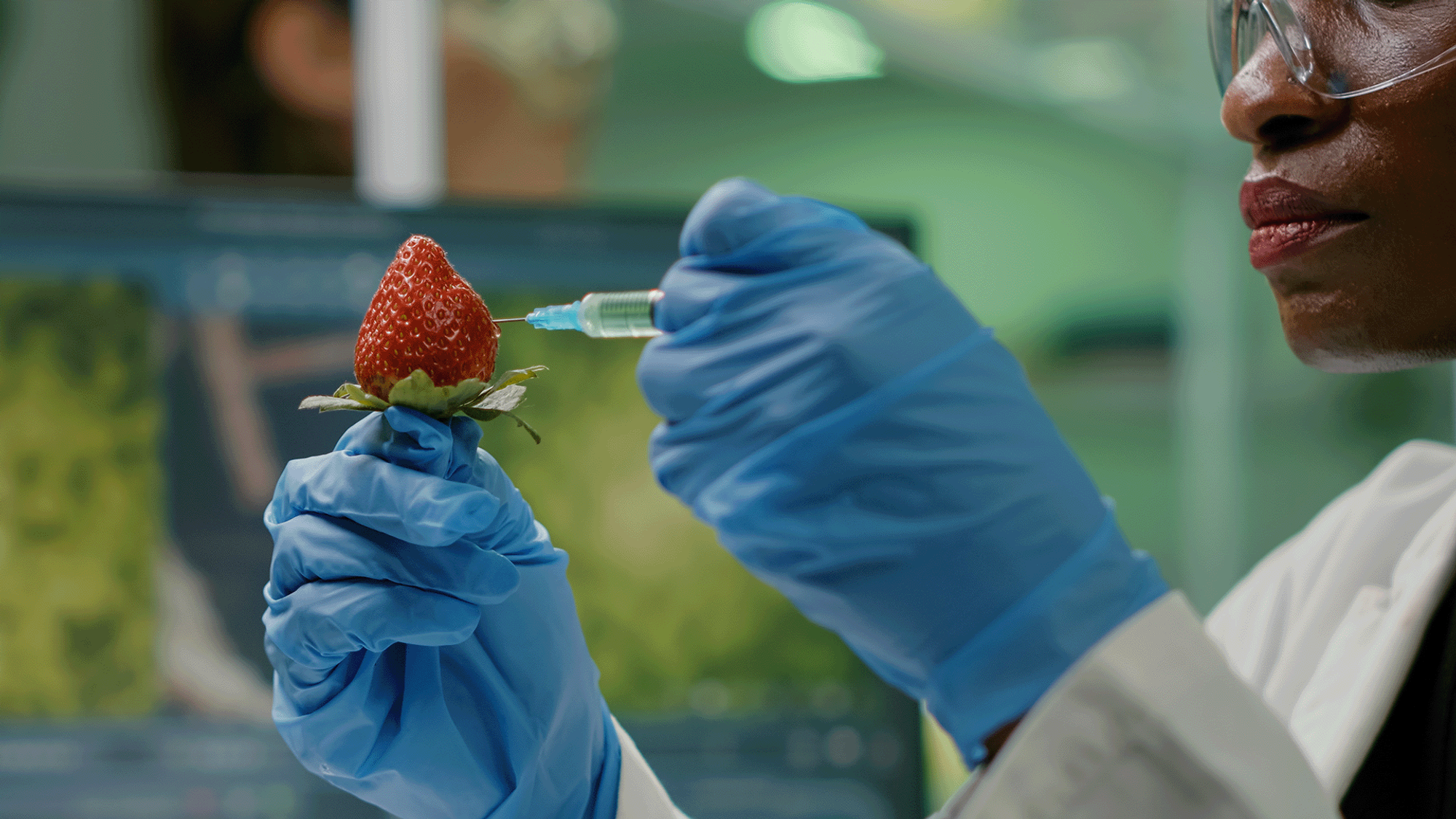
However, factory food producers don't like to list ingredients on their labels that say, "flavor enhancer," so they are often called emulsifiers, thickeners, and preservatives, or they just list the chemical name and hope you don't look it up. But as discussed in the lesson You Breed What You Feed, these so-called emulsifiers, thickeners, and preservatives are harmful for reasons beyond overstimulating your hunger. So, in the end, it gets simple again. Don't eat factory food since only one of its many harms is often stimulating hunger.
Hunger, already overstimulated by bioreactor dysfunction and dysbiosis, becomes overwhelming when additional hunger stimulants from factory foods and certain comfort foods are added to the mix. Eating under these circumstances is no longer voluntary.
But there is more to taste and hunger than flavor enhancers. Taste is also a sophisticated early warning system that alerts the digestive tract to what type of food is coming. With this warning, the body can prepare just in time the right type and amount of digestive chemistry to match the type and quantity of food coming. It is essential that the signaling of what food is coming matches what food is actually coming. Otherwise, the digestive chemistry will not match in type or amount.
For example, something tasted in the mouth, even without calories, triggers the release of food-processing hormones into the gut, such as bile salts and insulin. Once in the gut, these hormones are expected to find calories, and if they don't, the body releases calories from storage in the muscles and liver, which are replaced later the next time you overeat.
This is why study after study shows people who replace calories with calorie-free foods do not lose weight and why the calories-in, calories-out approach to weight loss generally does not succeed in the long run.
This mismatch of expected food, signaled by taste, and actual food delivered to the gut for processing doesn't only affect the calorie balance. It also impacts hunger. For example, if flavor enhancers signal excessive sweetness, more insulin will be released than needed for the actual quantities of sugars. The left-over insulin will send a message to the body for more calories. That message is that all available calories have been processed. We call that message hunger.
And so it goes for fats, oils, proteins, and even fiber. One of factory food's significant hunger mechanisms is over-amplification of the signal from taste, which over-produces food processing chemicals in the gut. This mismatch increases hunger, often above the threshold where eating is no longer voluntary.
Thinking and Hunger.
As discussed in the lesson, It's About Know Power, Not Willpower, the first 50 years of nutrition research were primarily undertaken by psychologists and sociologists because obesity was generally considered the result of a mental process, such as inadequate willpower or lack of character. There certainly is a mental component of food addiction and dependence, particularly in the more extreme cases. But here, we're focusing on the all-too-often overlooked, high-energy-consuming process of cognitive thinking.

The human brain is the most energy-consuming organ of the body, especially when engaging in intense cognitive thinking. Despite comprising only about 2% of the body's mass, the brain consumes up to 20% of the body's energy. Who hasn't left a challenging meeting with an intense craving for pizza and beer? Why do many meetings have donuts, sweet rolls, sugary fruit juices and sodas, and other high-energy foods nearby?
As discussed in the lesson Counting Calories Adds Up to Failure, the blood is the most readily available source of glucose, an energy-rich nutrient. There is also a secondary source of glucose stored in the muscles. When an intense thinking session draws down the glucose in the blood, hunger rises quickly and significantly to replenish that blood glucose. The body doesn't know how long the brain will need to be doing the heavy cognitive thinking, so it sets replenishing the blood glucose through hunger as a top priority. Hence, there is a rapid onset of intense hunger during or soon after the meeting.
However, if you resist this hunger spike, the body will replenish the blood glucose with the glucose from the muscles. In 30 to 60 minutes after the hunger spike, the intense hunger will decrease, and you will have saved eating all those extra calories. This hunger will often lessen even as the meeting is ongoing because there is plenty of glucose in the muscles once the transfer is underway. You just have to know to wait for the backup energy supply to kick in. It is much easier to resist hunger spikes when you understand them and believe from your own experience that they will soon be significantly reduced.
Lastly, the relationship between thinking and hunger is not only about meetings and cognitive thinking. Worry and stress are just as much a brain energy burner as cognitive thinking, and everything described about meetings can apply to sitting alone in your bedroom under stress or worrying or at your computer on social media trying to get somebody to play nice.
Sensing Food and Hunger.
One of the more dramatic ways to know you're in trouble with hunger is when you realize that, although you feel completely full after a big meal, you are still hungry. In this all-too-common situation, the relationship between the quantity of food eaten and satiety is completely broken.
Although much more subtle than tasting or seeing food, sensing food in your body (also known as feeling full) turns out to be the most effective way to regulate your relationship with hunger. However, you need training to sense and understand the food signals in your body.

The key is to eat a quantity of food so that you are full 30 minutes after eating, not when finished eating at the table. The body's satiety systems have a 30-minute delay that signals you have eaten the right amount. This 30 minutes is the time it takes for food to leave the stomach and enter the bioreactor (i.e., the small intestine) and trigger satiety. Food entering and leaving the bioreactor is the most reliable and effective hunger signal to increase and decrease hunger. Learning to read this signal is a very effective way to manage hunger.
If you eat until you are full at the table, you will always overeat. If you are still hungry 30 minutes after leaving the table, eat more. If you feel full before 30 minutes, eat less. You will soon figure out the right amount of food to serve to ensure you feel full 30 minutes after finishing your meal. The sensation of fullness, properly understood, is a much more effective means of avoiding overeating than trying to count calories.
Also, when practicing the Nutrimatters’ 6by6Living™, you will experience a hunger spike 3 to 4 hours after you last put nutrition in your mouth. This period is the time it takes for the last of the food to leave the bioreactor. This hunger spike is typically masked by routine snacking but will be very obvious when practicing the Nutrimatters’ SnackNix™ Program because you will not mask this hunger spike with snacking.
Do NOT put anything except water in your mouth during this hunger spike, or you will worsen the hunger. This hunger will start to subside in 30 minutes and typically be gone by bedtime. The longer you practice 6by6Living, the less severe this hunger spike becomes, with it becoming almost unnoticeable after four to six weeks of practicing 6by6Living™.
Bedtime snacking is very common because people believe eating will help them fall asleep. 6by6Living™ seems impossible because they believe bedtime hunger will keep them awake. It can be true that eating before bedtime helps you initially fall asleep, but once you understand why, you’ll see it’s not a good idea.
Alcohol, complex sugars like fructose and sucrose, and most factory food with its additives and flavor enhancers in the bedtime snack interfere with the body's energy conversion systems, also known as ATP and the Krebs cycle. This interference with the body's energy conversion systems, makes you feel momentarily tired about 30 minutes after your snack. If you time it right, you feel like the snack helped you fall asleep.
However, when the body's energy conversion systems recover and bounce back a few hours later you may wake up with a surge of energy. The net effect is overall a bad night’s sleep. This is very much like smoking to stay thin. It may work, but is it worth it? There are better ways to help you fall asleep and stay asleep than before-bed snacking. Use them.
Being Asleep, The Best Hunger Control System Ever.
Once you overcome the 3 to 4-hour post-meal hunger spike and the need to snack to fall asleep, you activate the best hunger mitigation strategy available. You fall asleep. The beauty is you're unaware when the inevitable hunger begins its insidious efforts to get you to eat.
Sleep is the great equalizer. Even if you are facing extreme hunger from factory food or bioreactor dysfunction and dysbiosis, you're still asleep. You may dream more about food, but mostly, you'll sleep through it and be unaware you're hungry.
The severity of hunger becomes irrelevant when you are unaware due to sleep.
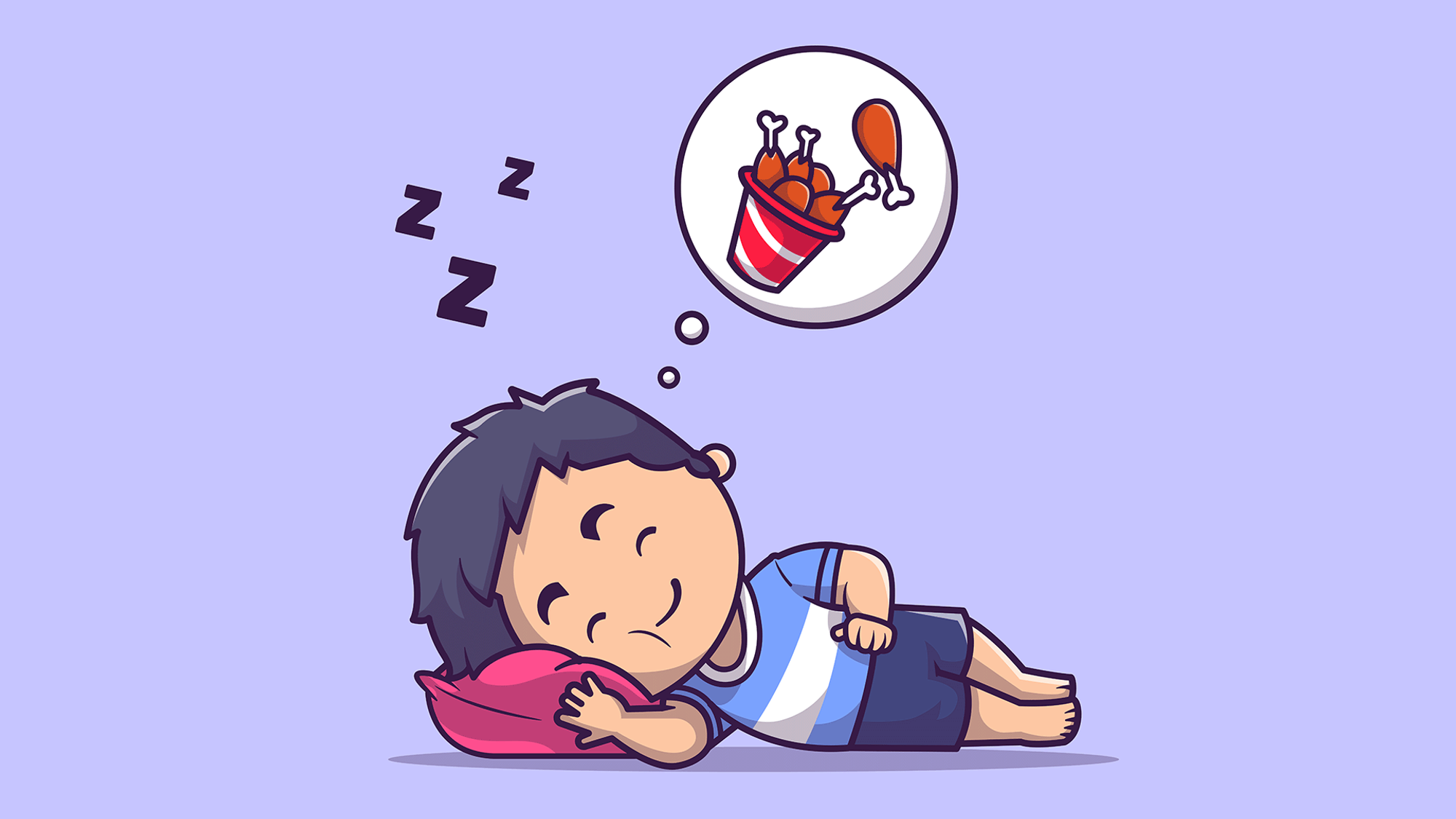
The benefits of timing hunger to coincide with sleep also help explain the many contradictory results of different Time Restricted Eating and Intermittent Fasting protocols. It makes a difference when the non-eating and fasting period happens relative to sleep and the circadian rhythm. When daily fasting during sleep, results are often positive. When fasting while awake on intermittent days when facing the full force of hunger, results are typically less effective.
Hunger Is Very Personal.
There is no objective measurement system for hunger There are only subjective systems that ask how hungry you feel, which can be biased by many personal differences. But what if an objective measurement showed your hunger was 10 times someone else’s? Do the same standards of hunger control apply? Science is working on this objective standard, but it’s not here yet.
What is known is that there is a wide range of hunger intensity that is determined by where you are on a continuum based on how much factory food you eat and how much bioreactor dysfunction and dysbiosis you have. You don't have to be very far along that continuum before hunger becomes overwhelming.
Generally, hunger exceeding natural hunger will likely always be part of the early phases of improving your nutrition, especially if you've been overeating factory food and have bioreactor dysfunction and dysbiosis. TrustedEating™ will help you avoid the worst of factory food. 6by6Living™ will help heal your bioreactor dysfunction and dysbiosis and let you sleep through the worst of the hunger. Know power will help you learn when to expect hunger spikes and how to manage them when you’re awake.
Understanding how seeing, tasting, thinking, and sensing food impacts hunger and learning through your own experience what you can do about it is how you outsmart hunger.
Actionable Knowledge
- The more you overeat factory food, the more sedentary you are, and the worse your bioreactor dysfunction and dysbiosis, the hungrier you will be for a given nutritional deficit.
- The human brain is the most energy-consuming organ of the body. Despite comprising only about 2% of the body's mass, the brain consumes up to 20% of the body's energy. As energy in the form of glucose is depleted from your blood, hunger spikes. However, if you resist this hunger spike, the body will replenish the blood glucose with the glucose from the muscles. The intense hunger will decrease 30 to 60 minutes after the hunger spike. You will make it to the next meal and have saved eating all those extra calories.
- If you eat until you are full at the table, you will always overeat. If you are still hungry 30 minutes after leaving the table, eat more. If you feel full before 30 minutes, eat less. Properly understood, the sensation of fullness is a much more effective means of avoiding overeating than trying to count calories.
- Once you overcome the 3 to 4-hour post-last-meal hunger spike and avoid the need to snack to fall asleep, you activate the best hunger mitigation strategy available. You fall asleep. The severity of hunger becomes irrelevant when you are unaware due to sleep. Sleep is the great equalizer. You may dream more about food, but mostly, you'll sleep through it and be unaware you're hungry.
Article Top Sponsors

 Donate to Help Improve Articles
 Last Updated 07.16.26 10:02 AM ET