Article No. 14
The impact of food changes by time of day. - Read 19 Min.
WHEN Is as Important as WHAT You Eat.
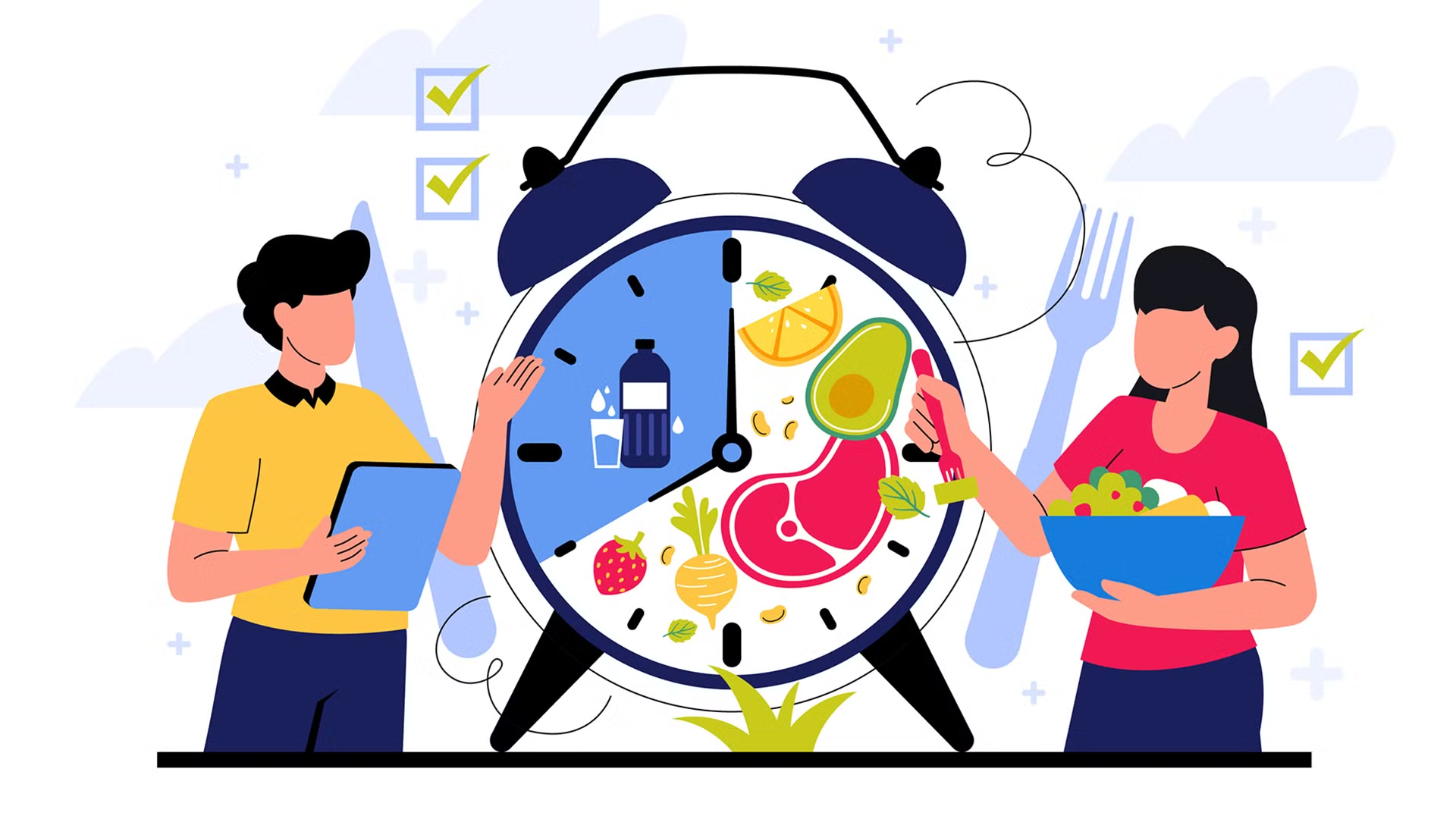
Top Sponsors of this Article
 Your Name - Your Organization Your Name - Your Organization Your Name - Your Organization Your Name - Your Organization
Table of Contents
The same food with the same calories eaten at different times of day have very different effects.
Give It a Rest
The preceding lessons in Nutrimatters have made a case for permanent weight loss and avoidance or reversal of metabolic syndrome, obesity, and metabolic disease by avoiding and reversing bioreactor dysfunction and dysbiosis. In other words, without a healthy gut and microbiome, you will most likely accomplish only temporary weight and metabolic condition improvements regardless of the method applied. One of the most important things you can do to accomplish a healthy gut and microbiome is to support the 5Rs essential to all cell health.
As discussed in other lessons, the bioreactor, microbiome, and virtually all living cells survive and thrive under the 5Rs: Response, Rest, Repair, Recovery, and Repeat. Response and Repeat occur when the cells are working. Rest, Repair, and Recovery occur when the cells are not active. Think of individual cells as having awake and sleep cycles, just like the body. Cellular awake sleep cycles make sense when you consider the body is a collection of cells. Therefore, you don't want the bioreactor and microbiome to be awake processing food constantly. Just like an optimal awake sleep cycle for the body, there is an optimal awake sleep cycle for one of the body's most essential systems, the bioreactor and microbiome.
At first, this may seem easy to accomplish since most people don't eat while sleeping. Further, your bioreactor and microbiome sleep when you're sleeping. Right? Sorry, but there is one often overlooked detail called bioreactor transit time. The bioreactor transit time is the time it takes for the food bolus to leave the stomach, enter the bioreactor, then leave the bioreactor, and enter the colon.
The bioreactor transit time is remarkably consistent among individuals at 3 to 4 hours. Also, there are no pauses or stopping of the bolus transit. Once food enters the mouth, it will continue nonstop until it reaches the colon. Add 30 to 45 minutes in the mouth, esophagus, and stomach, plus another hour for the bioreactor to clean up and shut down; it takes from 4 to 6 hours after you put anything except water in your mouth before you can be assured your bioreactor and microbiome are "sleeping."
Therefore, if you eat a late dinner or snack before bedtime, you may fall asleep at 10 pm, but your bioreactor will be awake working for up to another 6 hours, finally falling asleep at 4 am. Further, when you wake up at 6 am and eat breakfast at 8 am, you may have had 8 hours of sleep, but with the first bite, the bioreactor awakens with only 4 hours of sleep. Remember from previous lessons that when the mouth detects food, it signals the bioreactor to begin functioning even though the food bolus hasn't yet arrived. The cells in the bioreactor are the same as the rest of the nervous system and body; they need 8 hours of sleep. Your bioreactor and microbiome are getting half the time for their required Rest, Repair, and Recovery.
Time Restricted Eating and Intermittent Fasting
As new science began to show the harm of late eating, it became apparent that this greatly impacted major industries, such as factory food, hospitality, and food and beverage. As mentioned in other lessons, a primary tool for industries maintaining the status quo in the face of new science revealing harm from their products is a strategy called "merchants of doubt," first widely practiced by the tobacco industry. This approach avoids directly pitting independent experts and scientists against industry experts and scientists. Instead, the status quo industry supports a great volume of conflicting opinions and research until the general public gives up trying to make informed decisions in the face of overwhelming, confusing, and conflicting information.
Few research areas generated more conflicting results than the importance of when you eat, typically described in research as Time-Restricted Eating or Intermittent Fasting. The magnitude of the confusion in this particular area may say something about how much the commercial status quo is concerned about public insights into how important the timing of eating is to good health.
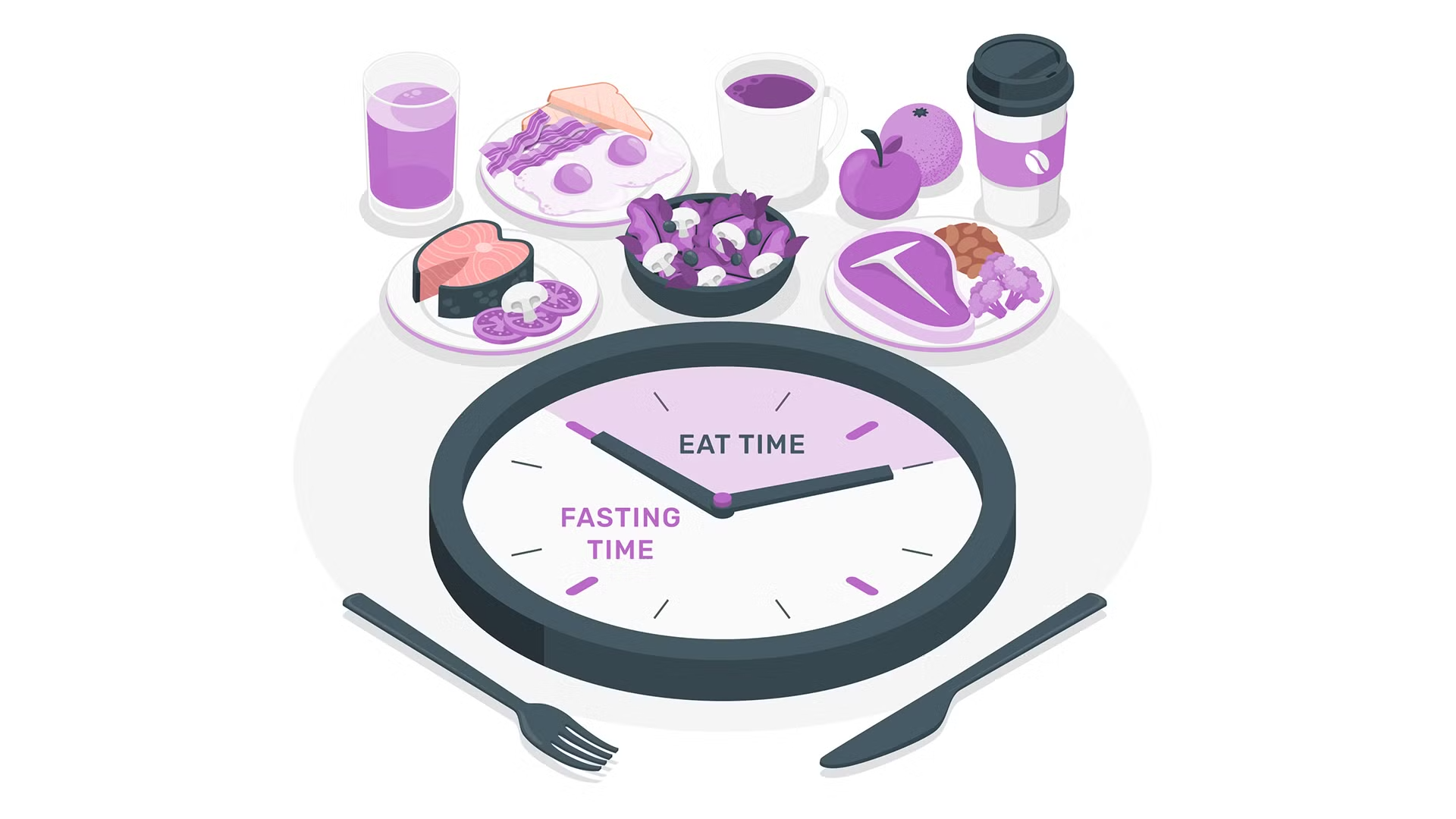
Early reports on the new science of eating schedules used the terms Time-Restricted Eating and Intermittent Fasting interchangeably to mean the same thing. Further, the research designs and endpoints were inconsistent. The fasting schedules could be every day, a day a few times a week, or several days in a row, one or more times a month. Also, the time of day for eating was all over the map. Unsurprisingly, results were also all over the map, all reporting that Time-Restricted Eating or Intermittent Fasting both worked and didn't work. The full range of successes and failures was unsurprising, given that many different things were being tested under the same research description.
The net effect of these confusing and conflicting results regarding the timing of eating was to obfuscate the importance of when a person eats, keeping the focus on what a person eats. The status quo wanted to keep the focus on what you're eating. There was little commercial value for people changing eating times but substantial commercial value in getting them to buy particular foods.
Eventually, efforts to clarify the terms and endpoints started to make progress. The terms clarified that Time-Restricted Eating described fasting during a portion of a day, and Intermittent Fasting described a full day of fasting for some full days in the week or month.
However, much of the research currently available to the public is either from before this clarification effort was made or by researchers who did not apply the terms according to the new thinking. Also, most of these studies had endpoints and covered periods too short to address the permanent benefit of interest in avoiding or reversing metabolic syndrome, obesity, and metabolic disease.
With better definitions and endpoints, sorting the wildly conflicting research results becomes at least possible. Intermittent Fasting can be effective for short-term weight loss, reset hunger and other hormone systems, and trigger some of the body's healing and recovery systems. However, Intermittent Fasting did not yield significant results to support the improvements in bioreactor dysfunction and dysbiosis required for improving metabolic conditions.
Time-Restricted Eating yielded mixed results depending on the restricted eating time of day. Recently, studies started looking at a subset of Time-Restricted Eating that scientists call Late Dinner.
Late Dinner
The objective of the Late Dinner studies was to examine the impact of Late Dinner on nocturnal metabolism in healthy volunteers. The best of these studies was a 2020 randomized crossover trial of Late Dinner at 10 pm vs. Regular Dinner at 6 pm with a fixed sleep period from 11 pm to 7 am in a controlled laboratory setting that monitored eating and sleeping. This study was one of the few nutritional studies that didn't rely on the fatal flaw of most nutritional studies of self-reporting eating.

Participants comprised 20 healthy volunteers, 10 male and 10 female, with an average age of 26 and average body mass index (BMI) of 23.2. Two randomly chosen groups of ten volunteers ate the same dinner, making up 35% of their daily kcal, comprised of 50% carbohydrate, 35% fat, and 15% protein. One group ate at 6 pm. (Regular Dinner), the other group ate at 10 pm (Late Dinner). This study was particularly fascinating because the endpoint was not weight gain or loss like almost all nutrition studies. The endpoint was changes of metabolic markers in the blood. Measurements included nocturnal and next-morning hourly plasma glucose, insulin, triglycerides, free fatty acids, cortisol, dietary fatty acid oxidation, and overnight sleep monitoring.
The results showed that Late Dinner caused higher glucose, a triglyceride peak delay, and lower free fatty acids and dietary fatty acid oxidation. Late Dinner did not affect sleep behavior but increased plasma cortisol. Late Dinner caused nighttime glucose intolerance and reduced fatty acid oxidation, especially in earlier sleepers. The fact that early sleepers were more adversely affected indicated that eating near sleeping worsens the risk of metabolic conditions.
The Late Dinner studies indicate that something even more harmful is happening than disrupting the long-term Rest, Repair, and Recovery of the bioreactor and microbiome. While certainly having a long-term impact, disrupting Rest, Repair, and Recovery would likely not immediately affect metabolic condition indicators in the blood. Something else is happening with the biochemistry.
Back to the Sun
In the Nutrimatters lesson “Meet Your Essential Organ, the Bioreactor,” we explain how nutrition is experiencing a Galileo moment as when humanity recognized the Sun is the center of the then-known universe, not the Earth. The point here is how new scientific understandings can fundamentally change our understanding of the world around us. The importance of the bioreactor and its microbes is another case where new science has changed our fundamental understanding of nutrition and how the body works.
But this is not the end of the story for the Sun and nutrition. Most life on Earth has evolved in synchrony with the Sun's daily cycle. The most apparent manifestation of this cycle is the sleep and awake cycle. Generally, throughout evolution, sleep is correlated with the Sun not being present and awake with the Sun being present. Sleep also became the time of rest and recovery, while awake became the time of activity and accomplishment. The Sun's cycle shaped life on Earth for millions of years, with only a gradual change due to the development of fire and artificial lighting in the last few thousand years.
While modern lighting and lifestyles can shift the timing of the cycle relative to the Sun's presence or not, the cycle itself is hard-wired into our evolution; it cannot be avoided for long periods without severe harm to health. Scientists call this cycle the circadian rhythm.
Got Rhythm?
The circadian rhythm is a bodily function that encourages the transition from awake to sleep and back to awake by releasing hormones into the bloodstream. Upon losing sunlight or an artificial equivalent, the body releases hormones such as melatonin and serotonin, which encourage sleep. Upon the appearance of sunlight or an artificial equivalent, the body reduces the hormones melatonin and serotonin and may even add the stimulating hormone adrenalin, which encourages awakeness.
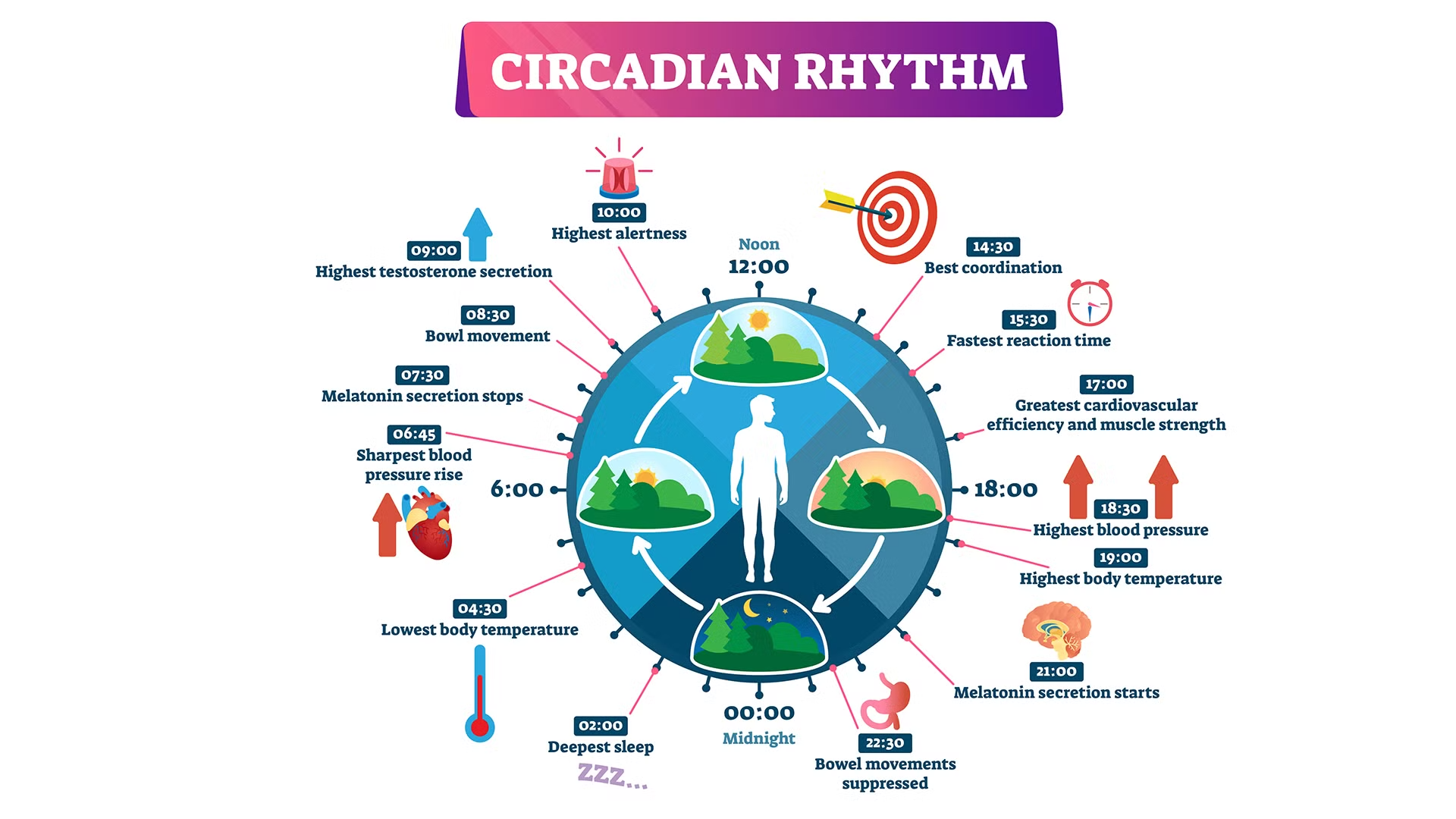
Therefore, the primary mechanism of the circadian rhythm is the chemistry of hormones that are added or reduced in the presence or absence of sunlight or an artificial equivalent. For many years now, people routinely attempt to improve their sleep by taking melatonin, avoiding stimulants, and adjusting ambient light at the right time to modify their sleep cycle.
The new science has revealed there is much more to the circadian rhythm than regulating the awake sleep cycle. The same biochemical systems of the circadian rhythm that use hormones to maintain the awake sleep cycle use other hormones to maintain the energy use or storage cycle.
When the body acquires energy from food, one of its first functions is determining what to do with it. Should the energy be made available for immediate use or directed to future use if it is not immediately needed? In that case, the future use can be to store energy so that it is readily available for future use or the body's repair.
Just like the hormones melatonin and serotonin are the primary regulators of awake sleep cycle, the hormones insulin and growth hormone are the primary regulators of energy use and storage. Again, just like melatonin and serotonin, insulin and growth hormone are controlled by the circadian rhythm, which is controlled by the awake sleep cycle and the Sun's light dark cycle.
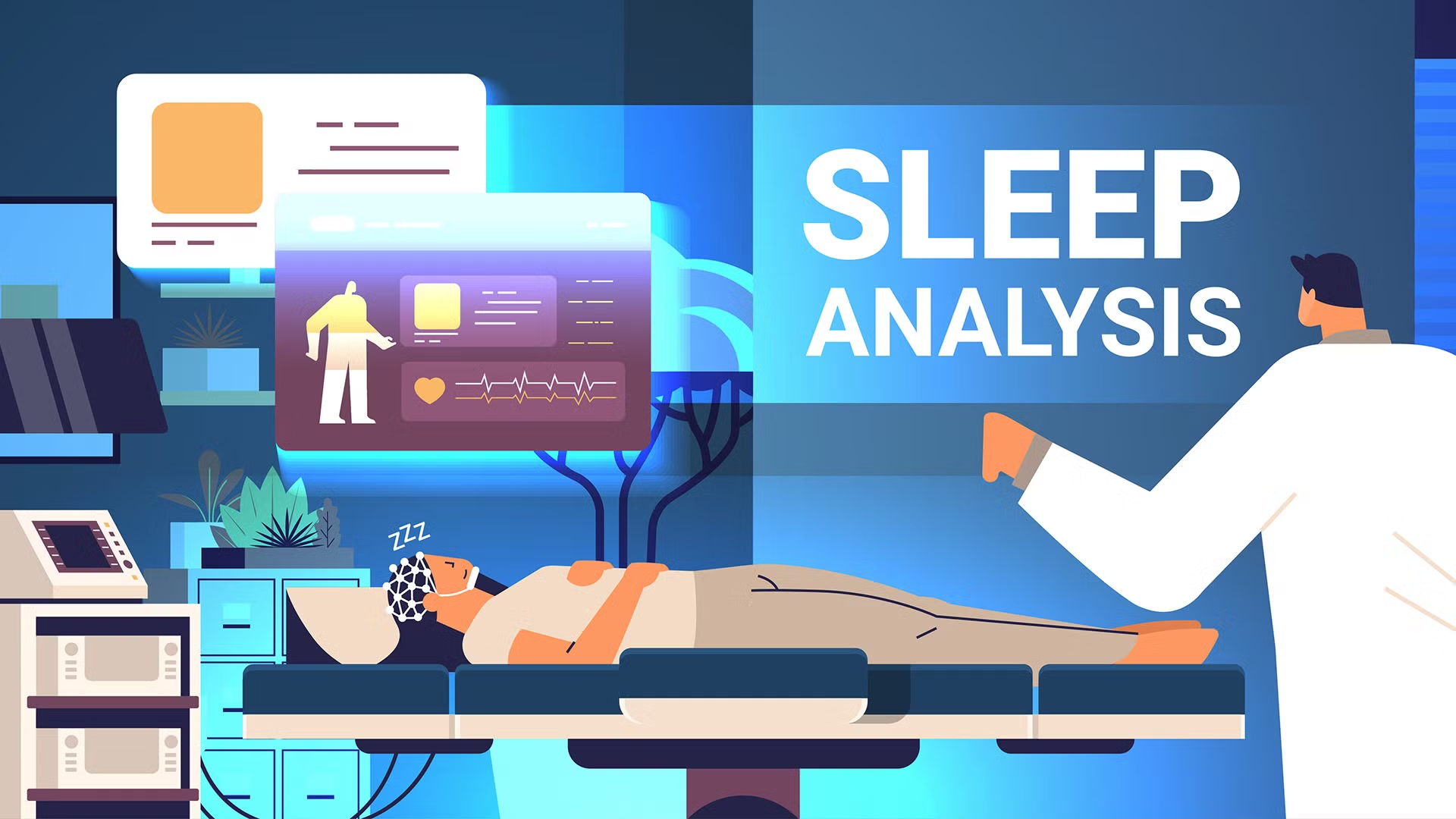
The circadian rhythm recognizes that the need for energy is much more likely to be when it's daylight, and you are awake and active. Further, the need for Rest, Repair, and Recovery is more likely while it's dark and you're sleeping and inactive. Therefore, the body anticipates these needs and prepares the optimal mix of hormones, insulin for energy and growth hormone for repair. Further, insulin works with glucose for energy, and growth hormone works with protein for repair.
Therefore, you want the right nutrients for the right hormones at the right time. Keep in mind that it takes 30 minutes to 6 hours from the time food is eaten to when its full range of nutrients is available to the cells. Ideally, eat your sugar, carbohydrates, and fiber (remember, it all becomes glucose) earlier in the day so the nutrients can be available at the peak of the awake cycle when insulin is dominant, and eat protein late in the day so it's available during sleep when growth hormone is dominant.
However, the presence of nutritional hormones is not solely determined by the circadian rhythm. As discussed in the lesson, "Do You Know You Have a Second Brain?" sensors in the mouth signal the bioreactor what type of food is coming, and the body prepares the appropriate nutritional hormone. Therefore, eating carbs before sleep will cause the body to have insulin, not growth hormone, as the dominant hormone.
Late eating of carbs results in two significantly adverse consequences: 1) when insulin is given energy in the form of glucose, but there is no activity requiring energy (such as when sleeping), that energy is stored as body and liver fat, and 2) with less growth hormone and less protein, there will be less cellular repair.
What does all this mean in practical terms? A pizza and beer are likely to have a very different impact on weight and metabolic conditions when eaten for lunch than when eaten in the evening at the local pub or craft brewery, even though both meals have the exact same composition and calories.
This also means that in a diet with a balance of sugar, starches, fiber (i.e., carbohydrates), and protein, it's much better to eat the majority of carbohydrates early in the day and increase protein throughout the day until you're eating mostly protein at the end of the day. And, of course, all eating should stop within four to six hours of sleep due to the need for Rest, Repair, and Recovery.
By the way, one reason Nutrimatters prefers stopping eating within six hours rather than the four hours of bioreactor transit time, besides giving the bioreactor time to reset, is this extra time allows the body to eliminate insulin and make growth hormone the dominant hormone during sleep and the all-important Rest, Repair, and Recovery cycle.
Therefore, when you eat is as important, if not more so, as what you eat because it determines what the body does with the food and whether the body can maintain its critical systems. Even the healthiest food, if eaten at the wrong time of day, can interfere with the body's Rest, Repair, and Recovery and cause the food's nutrition to be stored as body and liver fat rather than used for cellular repair. The direct result is bioreactor dysfunction, dysbiosis, and the formation of body and liver fat, which are the precursors of metabolic syndrome, obesity, and metabolic disease.
Further, eating before sleep causes the nutrition to be processed by hormones designed to store energy rather than use it. If your late eating is mostly sugar, starch, and fiber rather than protein, the body will also not prioritize healing and rebuilding.
Actionable Knowledge
- If you eat a late dinner or snack before bedtime, you may fall asleep at 10 pm, but your bioreactor will be awake working for up to another 6 hours, finally falling asleep at 4 am. Further, when you wake up at 6 am and eat breakfast at 8 am, you may have had 8 hours of sleep, but with the first bite, the bioreactor awakens with only 4 hours of sleep. Your bioreactor and microbiome are getting half the time for their required Rest, Repair, and Recovery portion of the 5Rs.
- The new science has revealed there is much more to the circadian rhythm than regulating the awake sleep cycle. The exact biochemical systems of the circadian rhythm that use hormones to maintain the awake sleep cycle also use other hormones to maintain the energy use or storage cycle.
- Eating carbs before sleep will cause the body to have insulin, not growth hormone, as the dominant hormone. This results in two significantly adverse consequences: 1) when insulin is given energy in the form of glucose, but there is no activity requiring energy (such as when sleeping), that energy will be stored as body and liver fat, and 2) with less growth hormone and less protein, there will be less cellular repair.
- What does all this mean in practical terms? A pizza and beer are likely to have a very different impact on weight and metabolic conditions when eaten for lunch than when eaten in the evening at the local pub or craft brewery, even though both meals have the exact same composition and calories. It also means in a diet with a balance of sugar, starches, fiber (i.e., carbohydrates), and protein, it's much better to eat the majority of carbohydrates early in the day, increasing protein throughout the day until you're eating mostly protein at the end of the day. And of course, all eating should stop within four to six hours of sleeping.
Article Top Sponsors

 Donate to Help Improve Articles
 Last Updated 07.16.26 09:58 AM ET