
Top Sponsors of this Article
 Your Name - Your Organization Your Name - Your Organization Your Name - Your Organization Your Name - Your Organization
Table of Contents
It's not about character. It's all about learning how the body works, and how it processes food throughout the day.
The Wrong Kind of Scientist.
The first 50 years of scientific research in obesity were primarily conducted by one form or another of psychologists or sociologists. That's because, then and now, many believe that the cause of obesity at the most fundamental level is a lack of individual willpower to control eating and activity. Or said another way, the cause is a lack of discipline, character, and mental fortitude not to overeat or be sufficiently active.

Overeating and inactivity then cause an energy imbalance, typically described as a calorie imbalance, which leads to obesity, which leads to metabolic disease. This is summarized as a lack of willpower causes obesity and metabolic disease. This has been and remains the most widely held belief system in nutrition.
However, in the Nutrimatters' lesson Counting Calories Adds Up To Failure, we see how a calorie imbalance does not cause obesity. If so, then what does this mean for the lack of willpower that causes the obesity belief system? Well, indeed, it's a nail in the coffin for this belief system. Let's put a few more nails in that coffin.
The implication of a lack of willpower to act in your best interest, in this case, maintaining your health, is that this is a failure of your moral responsibility to take care of your health. If someone acts immorally, then they can be considered immoral. Societies often take the position that immoral people have waived their rights to help and support from society. Since obesity and metabolic disease are massively expensive and complex crises, the moral authority to not engage in its remedy is very convenient and cost-effective.
This lack of a moral imperative to help occurs in other health conditions such as addiction, alcoholic liver disease, AIDs, and lung cancer due to smoking. The predictable result is people afflicted with these conditions often get a much lower standard of care, if any. This situation is considered manageable by some because these are relatively small populations in society and mainly out of sight, out of mind.
Why are obesity and metabolic disease different from these other moral failure diseases? That's easy. Obesity and metabolic disease now affect nearly 50% of Americans, hardly a small population, and they are very much in sight and on our minds.
What's Morality Got to Do with It?
The concept of moral responsibility to act in one's best interest and what that means to others has been debated for as long as human civilization has existed. Throughout recorded history, if one's precarious position results from one's moral failing, people, society, organizations, institutions, and governments often feel much less compelled to help.

More than two thousand years ago, the ancient Greek philosopher Aristotle developed his theory of moral responsibility in Book III of the Nicomachean Ethics, published in 350 B.C.E. Aristotle built on the even earlier work of Plato and others who introduced the inseparable relationship between voluntary and involuntary actions and morality. Aristotle taught that we are held responsible for our voluntary actions and thus eligible for either praise or blame. In contrast, we may be eligible for pardon or pity for our involuntary actions. Therefore, to blame someone for their actions, their actions must be voluntary.
Introducing this foundation of morality based on whether your actions are voluntary or involuntary is as old as civilization itself. It all boils down to whether overeating and inactivity are voluntary through observation. Hence, the ubiquity and persistence of the moral belief that you are subject to blame for overeating and inactivity.
However, the new science now provides a much better understanding of voluntary and involuntary human processes than was available from the time of Aristotle until recent history.
Voluntary vs. Involuntary.
In Counting Calories Adds Up To Failure, we discussed how the validity of the calorie balance theory of obesity depends on the time period during which the balance is maintained. Calorie balance can be a valid theory if the time period during which the balance is maintained is long enough. However, virtually no one can maintain the desired calorie balance over the required time period. This is very similar to the practical, real-world distinctions of voluntary vs. involuntary processes of the human body.
The importance of time in the voluntary vs. involuntary discussion becomes more apparent when you consider examples of other human body processes, such as breathing.
Breathing IS voluntary… for a short time period, whereafter it becomes quite involuntary.
Let's begin with a refresher course on how the body regulates voluntary vs involuntary actions. The nervous system regulates voluntary and involuntary actions in the human body. The somatic peripheral nervous system controls voluntary actions. This system enables voluntary conscious control over skeletal muscles, allowing us to perform activities such as walking, talking, and writing.
The autonomic peripheral nervous system regulates involuntary internal processes such as heart rate, digestion, and glandular secretion. These systems regulate functions that occur automatically, involuntarily, and unconsciously without effort or control. Most people cannot directly control insulin secretion from the pancreas or food movement through the digestive tract.
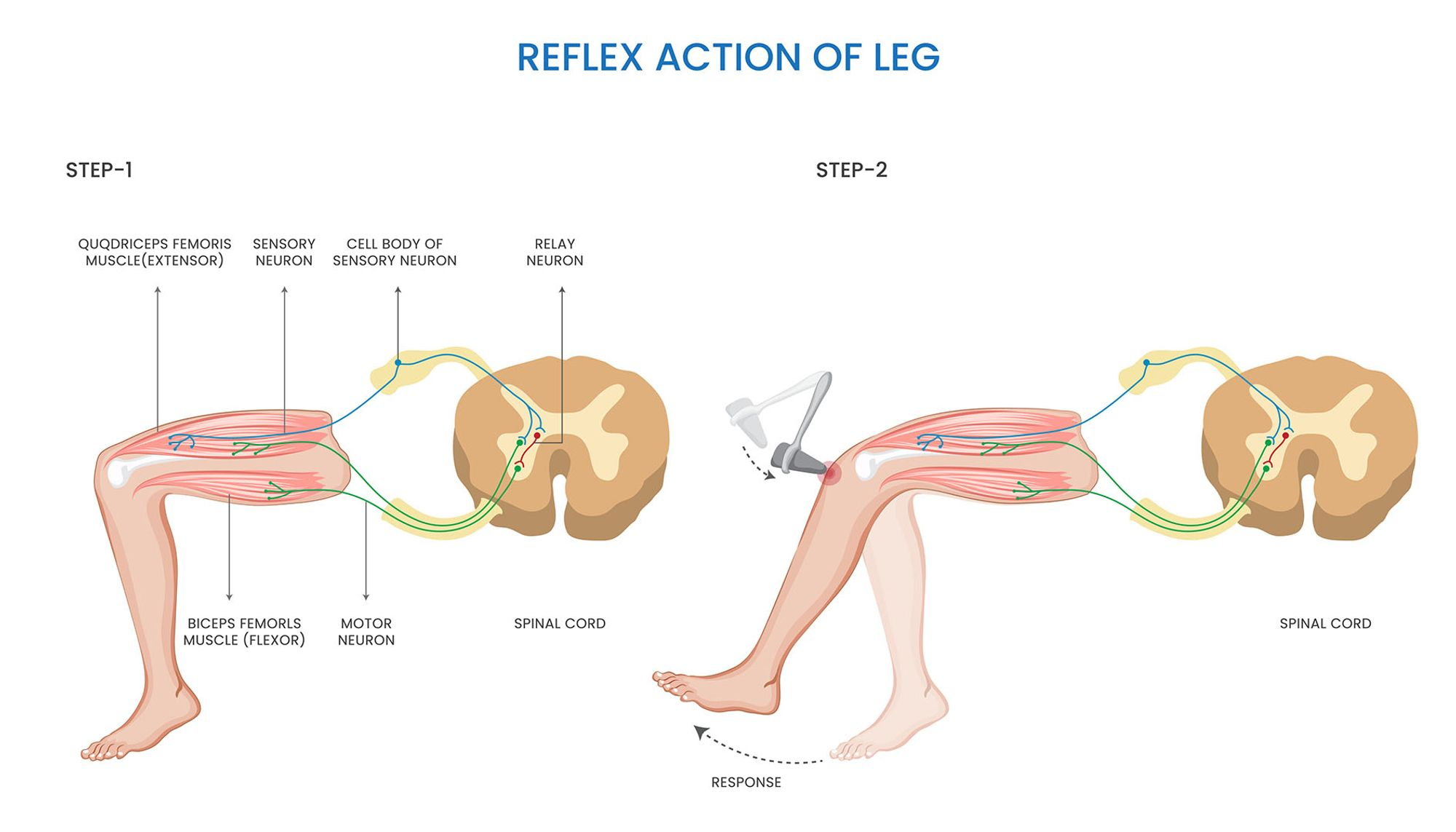
Not all human processes are exclusively controlled by one system or the other. Some human processes, such as respiration and blinking, are controlled by both the somatic and autonomic systems. These processes controlled by both systems typically allow voluntary control for a short period, then become involuntary over a longer time frame when the body perceives pending harm from the process that is voluntarily controlled.
The nervous system effectively coordinates voluntary and involuntary processes, ensuring that various bodily functions perform efficiently to maintain overall health and functionality. The takeaway here is that much of what determines what is voluntary and involuntary is hardwired into the basic design of the human body.
Therefore, many of the issues of how we approach obesity and metabolic disease come down to whether eating and activity are voluntary or involuntary human processes. Like breathing and blinking, eating and activity are controlled by both the somatic and autonomic nervous systems. The time period determines which system is in control. For example, with breathing, if the time period is 1 minute, breathing is voluntary. If the time period is 10 minutes, breathing is involuntary.
If you could remedy a health problem related to breathing by occasionally holding your breath for 1 minute, yet you don't do so, you are morally responsible for the health problem. Conversely, if the remedy requires occasionally holding your breath for 10 minutes, you are NOT morally responsible for not fixing the health problem. This is a fundamental truth of human society, and it's been that way for thousands of years.
In the lesson "You Can't Defeat Hunger, So Outsmart It," Nutrimatters covers the many complex and highly effective systems that govern hunger in the human body. When discussing how the body affects willpower, hunger is like breathing. When you hold your breath, chemical changes take place that the body perceives as harmful. The body increases the urge to breathe as these harmful chemicals increase to protect itself. Eventually, the urge to breathe becomes overwhelming, and you take a breath. This ultimately makes breathing an involuntary human process.
When you stop eating, chemical changes also occur that the body perceives as harmful. The body increases the urge to eat as these harmful chemicals increase to protect itself. Eventually, the urge to eat overwhelms you, and you eat. One primary difference between breathing and eating is that the time period is much longer with eating. But the only real impact of this longer time period is to make it harder to see that eating is just as much an involuntary human process as breathing. This ultimately makes eating an involuntary human process in the relevant time period of obesity and metabolic disease.
But what about activity, the other side of the calorie balance equation? Surely, that is voluntary. Certainly, you can get up and move at will. But what happens over time when the body's condition and chemistry make movement almost impossible due to weakness and exhaustion? Again, time comes into play. At some finite number of activity hours, activity becomes impossible. Like stopping eating, as you engage in too much activity, chemical changes occur that the body perceives as harmful. The body increases the urge to become inactive as these harmful chemicals increase to protect itself. Eventually, the urge to stop activity becomes overwhelming, and you take a rest. This makes activity an involuntary human process in the relevant time period of obesity and metabolic disease.
As you'll learn in the lesson Meet Your New Critical Organ, The Bioreactor, dysfunction of the bioreactor (damage to the small intestine), and dysbiosis (unhealthy microbes in the gut) change the body chemistry in a manner that mimics the chemistry of pending harm that causes the body to make you eat and sit, essentially reducing the time period to trigger an involuntary response to nearly always.
Therefore, eating and inactivity are involuntary in the presence of bioreactor dysfunction and dysbiosis. As a result, a person is not morally responsible for obesity and metabolic disease, and willpower is incidental to overeating and inactivity. Nevertheless, you're here because you are at risk for obesity and metabolic disease. If willpower is not the key to avoiding or reversing obesity and metabolic disease, what is?
Know Power Works. Willpower? Not So Much
At Nutrimatters, we call it know power. A basic understanding of how bioreactor dysfunction and dysbiosis over time trigger the body's involuntary processes to make you overeat and inactive will empower you through knowledge to change the trajectory of your obesity and metabolic disease. When you put know power to work for you, it becomes Actionable Knowledge.
Examples of know power are in the lesson When You Become The Infection. This describes how a damaged bioreactor allows microbes and gut fluids to translocate to the abdominal cavity, triggering an immune response. This immune response leads to the body mistaking your own cells as foreign cells and attacking them. This immune response occurs continuously 24/7 and uses considerable energy and resources.

Consequently, the body feels chronically fatigued, as if it were active all the time and never resting. So, it behaves as if it is active and burning energy even when it is completely sedentary.
In the lesson, If It's Not Protein Or Fat, It's Sugar, you'll learn that cells can only use the simplest form of sugar, known as glucose. All other sugars, carbs, and fibers must be reduced to glucose by digestion before the cell can use them. Therefore, there is not much difference between broccoli and a brownie on a cellular energy level. The result is awareness that overeating "good food" is not much different from overeating "bad food." This makes it easier to avoid overeating all kinds of food.
It's About the Liver... Stupid! teaches how insulin intolerance begins in the liver. Whenever you eat more sugar than can be processed by the microbes in the bioreactor, the excess sugar travels through the hepatic portal into the liver, where it is converted to liver fat. Liver fat is not bad if you're an ultramarathoner or do a lot of anaerobic high-intensity exercise. But for the rest of us, it causes Non-Alcoholic Fatty Liver Disease (NAFLD) and insulin intolerance. Further, these fat cells can displace liver cells and reduce the critical job of the liver, namely removing waste from the body and regulating body chemistry.
However, the liver fat's most immediate effect is to signal the body that plenty of nutrition is available, so more insulin is needed to convert the plentiful energy into fat in other parts of the body, particularly around the organs in the abdomen. This abdominal fat secretes inflammatory hormones in the immediate proximity of the body's organs. In the presence of excess insulin, the same amount of energy eaten is processed differently by the body; less is used as energy, and more is placed into storage as fat. This excess insulin also drives increased hunger and overeating. Excess insulin ultimately reduces the sensitivity of the cells to insulin, requiring more and more for a given amount of food eaten.
This liver fat is hard to get rid of. It takes extreme fasting and prolonged high-intensity activity to remove it. So, even if you return to better eating habits, the increased hunger and prioritization of fat formation may persist.
How to Use Know Power.
Learning from these lessons and others about how the body works based on the new science is integral to Nutrimatters' know power. But know power works best when you learn through your own experience.

A good example of the power of self-learned know power is personally discovering the relationship between sleep and caffeine. How did you become aware of this connection? Did you hear it from friends, family members, or medical professionals? Did you research it or learn from experience? If you're like most people, you found out through experience that caffeine before bedtime disrupts your sleep.
This teaches us that health information is easier to believe and act on when we experience it for ourselves. The truth is that most people need help making changes in nutrition and activity because they don't honestly believe they will get the promised benefit from the strenuous effort. And with the overwhelmingly conflicting, confusing, and mind-bogglingly complex advice available today, why should they?
Caffeine is just one of many compounds that are safe and useful at one time of day but less safe and disruptive at another. What if there were many more similar compounds, which are just more challenging to identify because they are less immediately impactful or the effect is less noticeable? Know power will help you identify and believe nutrition affects your health even if you can't perceive the effects as readily as a disrupted night's sleep.
You likely made the right decisions about caffeine and sleep because they have a simple cause-and-effect relationship. You didn't rely on information from others but your own experience, and you could experience the results right away, so the action-result relationship was obvious.
Nutrimatters believes those who have failed with nutrition can succeed if we can reduce the complex, confusing, and ever-evolving science of nutrition to:
- Simple cause-and-effect relationships.
- Enable learning by experience.
- Teach you to notice the effects so you believe they result from your actions.
Actionable Knowledge
- It all boils down to whether overeating and inactivity are voluntary or involuntary human processes. When discussing how the body responds to willpower, hunger is like breathing. When you hold your breath, chemical changes take place that the body perceives as harmful. As these harmful chemicals increase, the body increases the urge to breathe to protect itself. Eventually, the urge to breathe becomes overwhelming, and you take a breath. This ultimately makes breathing an involuntary human process.
- Dysfunction of the bioreactor (damage to the small intestine) and dysbiosis (unhealthy microbes in the gut) change the body's chemistry in a manner that mimics the chemistry of the harm of not eating and inactivity that causes the body to make you eat and sit. This ultimately makes eating an involuntary human process.
- Therefore, eating and inactivity are involuntary in the presence of bioreactor dysfunction and dysbiosis. As a result, a person is not morally responsible for obesity and metabolic disease, and eventually, willpower becomes incidental to overeating and inactivity.
- Those who have failed with nutrition can succeed by reducing nutrition's complex, confusing, and ever-evolving science to simple cause-and-effect relationships, learned by experience, and believing the effects result from your actions.
Article Top Sponsors

 Donate to Help Improve Articles
 Last Updated 07.16.26 09:53 AM ET