
Top Sponsors of this Article
 Your Name - Your Organization Your Name - Your Organization Your Name - Your Organization Your Name - Your Organization
Table of Contents
It all begins with understanding the difference between temporary and permanent weight loss.
Why Focus On Weight Loss?
Once someone begins seeking information about eating healthy and avoiding or reversing weight gain, they are immediately overwhelmed with a mind-boggling amount of conflicting, confusing, and complex information, even from the most authoritative sources. It's so overwhelming that knowing where to start organizing the information onslaught is almost impossible.
The best place to begin is deciding if you're interested in temporary weight loss to get into that little black dress or tux to look fantastic for the big event or permanent weight control to reverse or avoid obesity and metabolic disease and to feel great almost every day.
It turns out that the most critical first step in your nutrition and weight control journey is organizing everything you learn into two categories, whether for temporary or permanent change. Of course, there is everything in between, but thinking and acting based on two distinct choices is an effective way to make decisions in an environment of conflicting, confusing, and complex information.`

For this discussion, we'll focus on weight loss, often the first reason people become interested in obesity and metabolic disease. Typically, you are overweight 20 to 30 pounds, and your doctor has just mentioned pre-diabetes. But as you'll learn here, you've likely had symptoms of metabolic syndrome or even metabolic disease for years.
Keep in mind that almost all normal, otherwise healthy adults who are sedentary due to constant fatigue, facing insatiable hunger, steady weight gain, mood and cognitive decline, unusual skin, nail, and hair changes, and sore joints and muscles not directly related to exercise, are likely to have nutrition-derived metabolic syndrome, the precursor to metabolic disease.`
Remember, it is metabolic syndrome or disease that causes weight gain, not the weight gain that causes metabolic syndrome or disease.
Two Completely Different Types Of Weight Loss.
Biologically, behaviorally, and culturally, temporary and permanent weight loss are entirely different. In commerce, there is a considerable amount of commingling of the two in the weight-loss information, but in the new science, the two are clearly distinguished as very different.
Excess energy from food that is not currently needed is stored in fat cells, primarily located in three places of the body: 1) under the skin, 2) in the abdomen between the organs, and 3) in the liver. Under the skin, fat cells mainly affect appearance. However, it primarily affects health when fat cells are located between the organs and in the liver.
In addition to location, fat cells have two conditions relevant to this discussion: they can be 1) filled or drained, or fat cells can be 2) created or destroyed. The impact of excess fat cells on the body is a combination of their location in the body, how many fat cells were filled or drained, and how many fat cells were created or destroyed.
Fat cells can increase the area they occupy in the body by growing in size (filling), increasing in number (creating), or both. Most adverse appearance effects come from fat cells expanding the area they occupy in the body.

Most health effects of increasing fat cells come from the new scientific discovery that fat cells release inflammatory hormones (detailed in another Course and Article). But here, we note that this inflammation is at the root of symptoms of metabolic syndrome, including being sedentary due to constant fatigue, facing insatiable hunger, steady weight gain, mood and cognitive decline, unusual skin, nail, and hair changes, and sore joints and muscles not directly related to exercise. Eventually, this typically becomes obesity and metabolic disease.
Therefore, increasing the area of the body containing fat cells changes both appearance and health. Nutrimatters does not take any position on whether changes in appearance are beneficial or harmful. You might consider appearance beneficial if it calls attention to the developing metabolic syndrome.
Nutrimatters solely focuses on the substantial effects of nutrition on health in a food-abundant society. We do not focus on how nutrition changes appearance except as a symptom of health.
If fat cells are filled or drained, this is the domain of temporary weight loss. If fat cells are created or destroyed, this is the domain of permanent weight loss. Understanding this requires some storytelling on how the body handles the excess energy produced by excess nutrition.
Human evolution in a nutrient-poor world have made filling and draining fat cells relatively easy for the body, requiring little incentive and few resources. Throughout evolution, Nutrition shortages were primarily seasonal, so permanent changes in fat cells were rarely necessary. As a result, creating and destroying fat cells is difficult for the body, requiring sustained incentives and substantial resources.
How The Body Really Works.
Clearly, understanding how the body works regarding fat cells in the presence of excess nutrition is critical to healthy nutrition decisions. To help you visualize this, we'll use the example of a simple factory driven by a steam engine and a floor full of hard-working, productive workers.
Visualize the body's energy represented in the factory by heating a large tank of water and converting it to steam. The steam is piped to the engine, turning a generator, which provides electricity to all the production machines in the factory. But as the water leaves the tank as steam, it needs to be replaced with more water.
Ideally, you want to refill the tank with the exact same amount of water that left the tank as steam. But this turns out to be hard to do because the amount of electricity needed by all the factory machines changes considerably based on demand, time of day, worker attendance, and so on.
There is a tendency to overfill the large tank with water because water is inexpensive and readily available, and there is a bias toward maintaining productivity. What happens with the excess water? In the factory of the body, the excess water represents the excess energy stored as fat from excess nutrition.
Occasionally, a tiny bit of excess water is allowed to spill from the large tank onto the floor, and nobody really cares. But more water, continuously overflowing, needs a solution. So, an "overflow" bucket is built and added next to the main tank. Although the overflow bucket was a lot of work to make, filling it with overflow water couldn't be easier.

But after a while, the overflow bucket gets full, so the workers build another, then another, trying to deal with the significant and constant overflow. Soon, there were so many overflow buckets that they crowded out the factory workers' workplaces.
The factory workers realize they are running out of floor space and must stop making more overflow buckets. They must develop a way to drain the overflow buckets to keep handling the overflow from the main tank.
Of course, the overflow bucket in our story is the body's fat cells. Unfortunately, human evolution didn't ever anticipate such a nutrient-rich world that the body needed a drainage system for the overflow buckets.
So, in our little story, the workers have to stop working and manually use cups to remove water from the overflowing buckets. Now, every so often, they stop doing the good work of the factory to hand-drain the overflow buckets. This is equivalent to temporary weight loss.
One day, one of the workers had an idea: what if they developed a system to control how much water is added to the large tank by adding a water control timer? Everyone was skeptical; many said it couldn't be done or no one knew how to do that.
However, the workers were tired of hand-draining the overflow buckets and wanted to return to doing the factory's good work. And the loss of factory production was starting to hurt. In fact, the factory was beginning to look really run down, and everyone was tired.
So, the workers installed a new control timer to manage how much water was added to the main tank. Lo and behold, the overflows were, once again, infrequent and negligible. Most importantly, they did not need the overflow buckets or need to keep hand-draining them.
But what do we do about all the overflow buckets using up all that floor space? Breaking them down and carrying off the materials would be a lot of work and reduce factory production time. But getting all that factory floor space back would also be excellent.

After enough time had passed, the workers decided they would never again have to drain the overflow buckets, they could remove them, get their floor space back, and finally return to their former high productivity and restore the factory.
They had permanently stopped all of the problems from the water overflow and wondered why they didn't just fix the problem in the first place. In nutrition, Nutrimatters is the water control timer that permanently fixes the problem in the first place.
What Is Permanent Anyway?
Since it's relatively easy to fill and drain fat cells, temporary weight loss is the darling of commerce because nothing sells like success. It's pretty easy to sell improved appearance as success. Temporary weight loss can also begin quickly, another very positive attribute in the world of commerce.
People have also been encouraged to believe, or at least allowed to assume, that temporary weight loss also has substantial health benefits to further commerce.
There is also a lot of information, some from leading institutions, suggesting that temporary weight loss is on the same path to health benefits as permanent weight loss. The perceived health benefits of temporary weight loss come from improvements in the blood level of markers for metabolic syndrome that occurs in temporary weight loss.
While any improvement is positive, for these improvements to help the body heal, they must be present throughout the turnover period of the affected cells. The turnover period refers to the time it takes for the body to renew and replace cells.
Some cells are replaced as often as every few days, and some as long as every three years (and a few cell types much longer). Dr. David Sinclair's work is especially convincing that the body will replace damaged cells with like-new cells upon removing conditions that harm cells and disrupt renewal and repair.
The improvements that remove conditions that harm cells and disrupt repair must be continuously in place to cover the turnover period of cells. The best the new science can tell us is that this is at least three years and as long as five years. This turnover period covers most cell types involved in obesity and metabolic disease. Future research may provide more precision in this timeline.

Nutrimatters must be considered strictly in the context of the permanent weight loss that results from improved health. Because if you realize weight gain is a symptom of a health problem, you already know to focus on the cause, not the symptoms of health problems. As is discussed in other Nutrimatters Courses and Articles, the causes we're referring to are bioreactor dysfunction, also known as small intestine damage, and dysbiosis, also known as an unhealthy microbiome.
The solution to undesired weight gain, metabolic syndrome, and the resulting obesity and metabolic disease is constantly creating the conditions for the body to permanently heal its bioreactor and microbiome.
But even the new nutrition science cannot agree on what represents permanent weight loss, so much so that they often use more ambiguous terms, such as "durable" or "sustained" weight loss. The use of these terms is not trivial. In medicine, this distinction is the difference between managing a chronic disease and curing a disease. While there is every incentive commercially to treat metabolic syndrome as a chronic disease, Nutrimatters approaches metabolic syndrome as a curable condition.
Some otherwise well-done studies have posited weight loss as short as a year or two as an endpoint for permanent weight loss. In these studies, the target weight was realized only as an endpoint (i.e., end of the study) with little or no thought of what happened to the weight in between. The endpoint approach is favored in commerce, and these studies get a lot of visibility because this shorter endpoint approach is an easier target for many products and programs.
Further, in other areas of medicine, such as cancer, the term "cure" is used when the condition does not reoccur at any time over five years. We think this is the proper standard for obesity and metabolic disease. We can't see anything in the new science that obesity and metabolic disease should differ from cancer or other diseases.
Therefore, permanent weight loss, as a symptom of a disease that has been cured, is defined by Nutrimatters as five years without putting any significant portion of the weight back on at any time over that period. Everything you learn here should be taken in this context.
If your goal is improved health and feeling great most of the time, and not short-term change in appearance, you must set the goal of permanent weight loss. To accomplish this goal, you must cure your bioreactor dysfunction and dysbiosis. We designed the 6by6Living, SnackNix, SitNix, and TrustedEating programs to help you do exactly that. Our Courses and Articles explain how and why it all works.

While Nutrimatters focuses on a permanent cure of a condition that can take 3 to 5 years to restore to a pre-syndrome, pre-disease condition, that does not mean it takes that long to see the benefits. Depending on the severity of the bioreactor dysfunction and dysbiosis when you start, you can begin to feel better within two to six weeks and realize significant improvements in overall symptoms in six months.
These are improvements in fatigue, hunger, weight control, mood and cognition, skin, nails, and hair, and sore joints and muscles not directly related to exercise. If your condition has progressed, you can also expect to see improvements in your bloodwork of metabolic syndrome and disease markers.
The critical point here is that your weight is not the only symptom of metabolic syndrome or disease, and it will not be the only indicator of your progress.
Commercial Approaches And Weight-Loss Drugs.
In the context of permanent weight loss, commercial weight loss products and programs have
never credibly shown better than a single-digit success rate. Who can forget that virtually every
contestant on the TV show Biggest Loser™, when contacted years later, had gained all their weight back and, in most cases, even more weight than when they started.
We include the new weight-loss drugs in the temporary category because the weight loss only lasts as long as you take the drugs. And while it's too soon to know for sure about these new drugs, over the past several decades, almost every drug, whether for weight loss or otherwise, that is taken over many years either eventually loses effectiveness or adverse side effects accumulate to reach a threshold of intolerance or both.
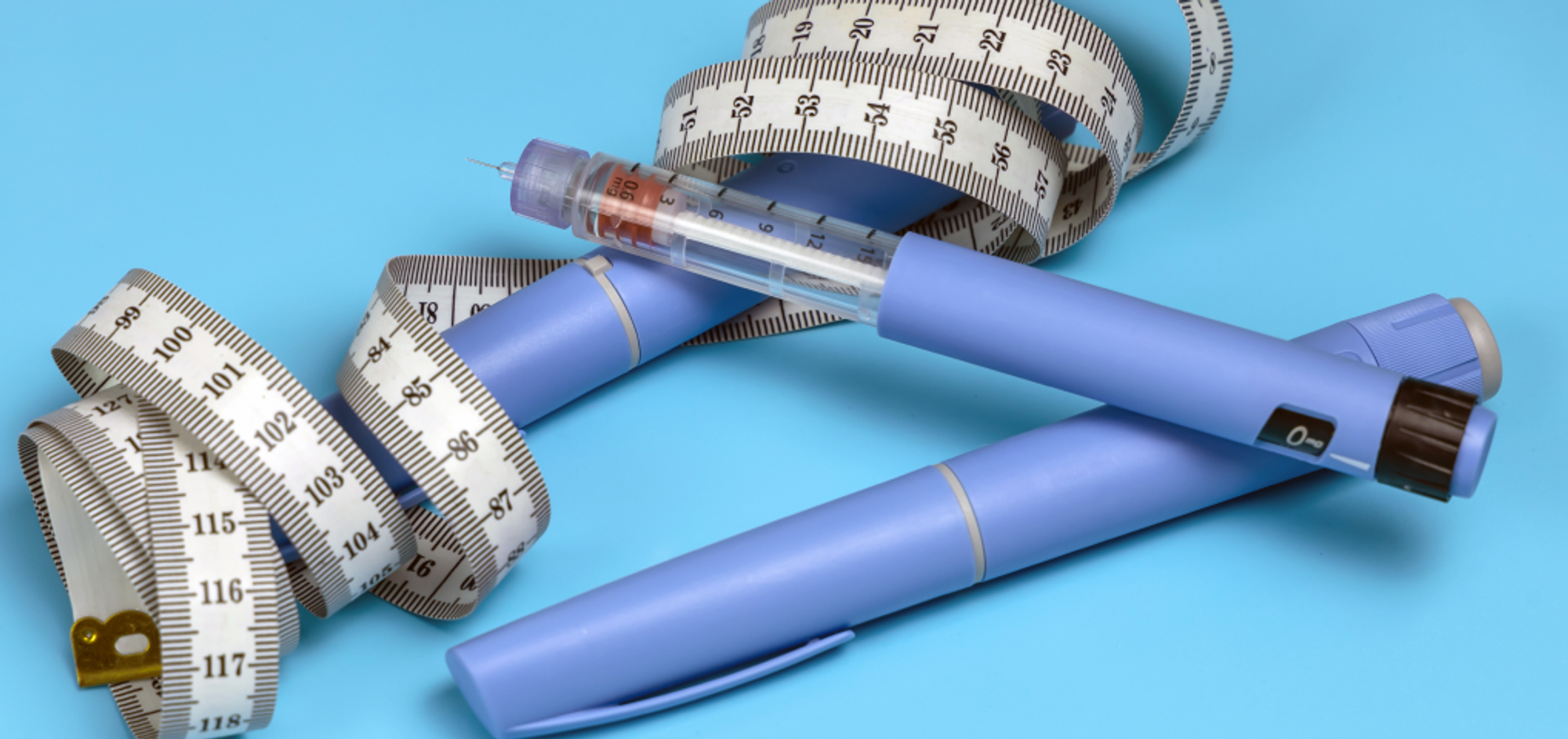
There is no reason to believe the new weight-loss drugs are exempt from this maxim, and early indicators are that these drugs may be particularly subject to it. Researchers are carefully watching the loss of muscle mass and the incidents of pancreatitis and gallbladder removal in users of these drugs.
In any event, it is unknown if the new weight-loss drugs can be safely used long enough for the body to remove fat cells rather than drain them. Hence, we are not yet prepared to include them in the permanent weight-loss category. Even if you can take them safely long enough to be considered a permanent solution, their expense will significantly limit the number of people accessing this approach.
Stop Creating And Start Removing Fat Cells.
So, how do you get the body to destroy fat cells rather than drain them? First, you stop creating new fat cells, particularly in the most harmful parts of the body, around the organs, and in the liver. Since almost 75% of American adults are already overweight, a generous supply of fat cells ready to be enlarged already exists.
Nevertheless, as explained in other Nutrimatters Courses and Articles, certain types of complex sugars, additives, thickeners, emulsifiers, preservatives, harmful oils, and alcohol in significant quantities in modern factory-made food encourage fat cell filling and creation around the organs and in the liver. First, stop eating food containing these, as detailed in the Nutrimatters 6by6Living and TrustedEating programs.
The historical belief is that extreme weight loss is the only means of destroying fat cells rather than draining them. But extreme weight loss over what period? The new science now has a deeper understanding of how the body determines it should destroy a cell. It marks the cell for replacement, later removes it, and even later replaces it, but only if needed. It is now understood this can be a lengthy process and only occurs under specific ongoing conditions.

As a result, the two most essential variables in fat cell removal are time and continuing need. Even an extreme fasting-driven weight loss of short duration is not likely to cause the body to destroy fat cells and not replace them. It will far more likely be a long, sustained period of no need for the fat cell that will prompt the body to remove and not replace fat cells.
Applying an age-old axiom of how the human body works, "use it or lose it," supports this understanding of destroying fat cells. If you don't "use" the fat cell during its turnover period by filling it, it will be selected for destruction, removed, and not replaced. The new science is uncertain how long this takes, but the three to five-year cell regenerative cycle will cover it according to what is currently known.
Game-Changing Insight.
Clearly, this is a game-changing insight. Constancy is more important than degree. In other words, keeping a small amount of weight permanently off will be more helpful than short cycles of large amounts of weight gain and loss.
This insight partly explains why "yo-yo" dieting often leads to increased long-term weight gain since fat cells are rarely destroyed and used frequently, resulting in their preservation.
If you're three months away from the big event, by all means, use temporary weight loss products and systems. For this purpose, the better ones have a reasonably good track record of accomplishing this goal.
But if you're sedentary due to constant fatigue, facing insatiable hunger, steady weight gain, mood and cognitive decline, unusual skin, nail, and hair changes, and sore joints and muscles not directly related to exercise, temporary weight loss products and systems have an extremely low success rate of permanently reversing these conditions.
So, if you want to feel great almost always and shorten that long list of disorders and discomforts we've been discussing, you have come to the right place. Nutrimatters is where you'll learn about permanently avoiding and reversing bioreactor dysfunction and dysbiosis (a.k.a. small intestine damage and an unhealthy microbiome) through a deeper understanding of nutrition, food, and the body based on new science.
Actionable Knowledge
- Temporary and permanent weight gain and loss are two completely different biological processes. Temporary weight gain and loss fill and drain fat cells, while permanent weight gain and loss create and remove fat cells.
- Applying an age-old wisdom of how the human body works, "use it or lose it," supports this understanding of destroying fat cells. If you don't "use" fat cells during their life cycle by filling them, they will be removed and not replaced.
- It is the metabolic syndrome and metabolic disease that causes weight gain and obesity, not the weight gain that causes metabolic syndrome or metabolic disease.
- The solution to undesired weight gain, metabolic syndrome, obesity, and metabolic disease is consistency over time, continuously creating the conditions for the body to permanently remove fat cells and heal its bioreactor dysfunction (small intestine damage) and dysbiosis (unhealthy microbiome).
Article Top Sponsors

 Donate to Help Improve Articles
 Last Updated 07.22.26 09:13 AM ET